
IMMUNITY WARRIOR
Immunity Warrior is a top-down action shooter game that will challenge your combat skills in a human organ environment. Descend deeper into the human body and explore the infected levels.
Armed with a gun as your main guidance, you will always be on your toes trying to survive and combat with the cells!
I closely collaborated with the programmers and the project lead to design, document, prototype, and implement critical features and game content under strict constraints and deadlines.
-
Engine: Unity
-
Team: 4
-
Role: Game Designer, Level Designer
-
Duration: 8 months
-
Release: Playstore
OVERVIEW
The project's motivation was to develop a top-down shooter game inspired by the prevailing Covid pandemic, illustrating how virus cells attack various regions within the human body.
DESIGN PILLARS
-
Simplify every aspect of the game by reusing existing elements.
-
All entities in the level must have a clear and distinct justification.
-
New levels must introduce new enemies, reinforce previously introduced mechanics and increase gameplay difficulty.


INSPIRATIONS AND RESEARCH
-
The game drew inspiration from an indie title called "Infection", a creation of Sebastian Stan developed during a game jam.
-
The narrative of the game loosely centered around the contemporary pandemic, fictionalized with elements from the "Infection" game.
-
Furthermore, the layout and theme of the environment took cues from the "Infection" game.
-
The design of props found its influence in real-world cells, sourced from various references on Google.
-
The level design and spacing were guided by various interior game environments, emphasizing distinct and justified elements.


HIGHLIGHTS
OBJECTIVE
Designing a top-down 3D environment optimized for seamless performance on mobile devices. This design prioritizes consistent frame rates (FPS) and high visual fidelity, guaranteeing a lag-free experience even during moments of high enemy spawning and pathfinding.
CHALLENGES
-
Utilizing Unity's terrain tools for environment creation
instead of hard-surface meshes. -
Implementing baked lighting and texture maps to achieve a visual effect akin to post-processing effects, while adhering to the Golden Ratio rule.
-
Crafting enemies and their mechanics in a way that aligns seamlessly with the game's narrative and facilitates player progression.
PROBLEM 1
How to efficiently design the level to mirror the intended environment, ensuring swift creation without excessive file size for mobile compatibility.
SOLUTIONS
-
Utilize Unity's terrain tools for level sculpting, eliminating the need for UV unwrapping for texturing as textures can be directly applied to the terrain.
-
This approach streamlines the process, as modelling in 3ds Max would necessitate frequent importing/exporting between Max and Unity. Since the terrain is a native feature of Unity, it offers greater convenience and time savings.
-
Moreover, the terrain already incorporates preset physics properties, obviating the need for additional coding and testing. This stands in contrast to a hard-surface mesh, which would demand a complex convex collider.
-
Furthermore, the terrain allows for swift reusability and modification for each level. In contrast, employing a hard surface mesh would entail creating separate meshes and subsequently generating prefabs from them.


LEVEL BUILDING PROCESS
The level design was done in 5 stages that covered 4 levels of quality.
-
L0 Initially, a swift sketch of the level was created in Photoshop and subsequently imported into Unity as a texture map.
-
L1 Following this, the level was transformed into a 3D environment using Unity's terrain tools.
-
L2 Next, the level underwent testing with a third-person controller, while the painting of textures took place.
-
L3 Subsequently, the level went through iterations and was set dressed with suitable props.
-
L4 Ultimately, the texture maps and lighting were baked into the level to achieve the desired visual outcome.
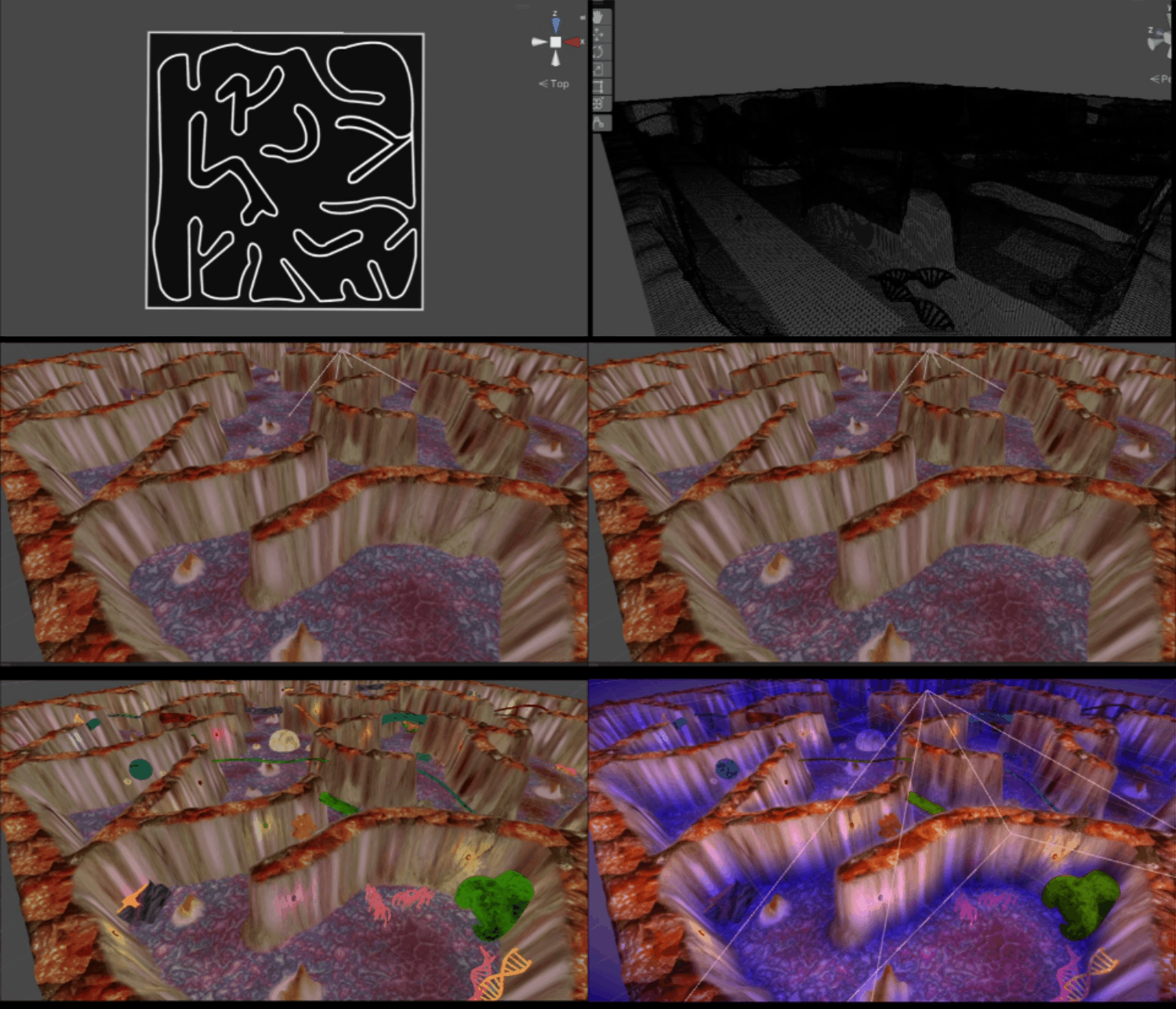


Level development process was informed by change to gameplay and playtesting results.
PROBLEM 2
How to attain a comparable visual impact to post-processing and real-time lighting, but through the utilization of baked lighting and texture maps so that this approach ensures seamless performance on mobile devices without any FPS lag.
SOLUTIONS
-
Capture all real-time and directional lighting within the scene by generating baked light data. This eliminates the necessity for dynamic lighting.
-
Optimize textures by compression, lower polygon counts on models, and convert files into asset bundles. This efficiently conserves memory resources for mobile devices.
-
Develop distinct versions of the game: one tailored for PC with post-processing effects, and another for mobile without post-processing. This approach ensures a higher quality build for PCs and a well-suited build for mobile devices.

Mobile version

PC version
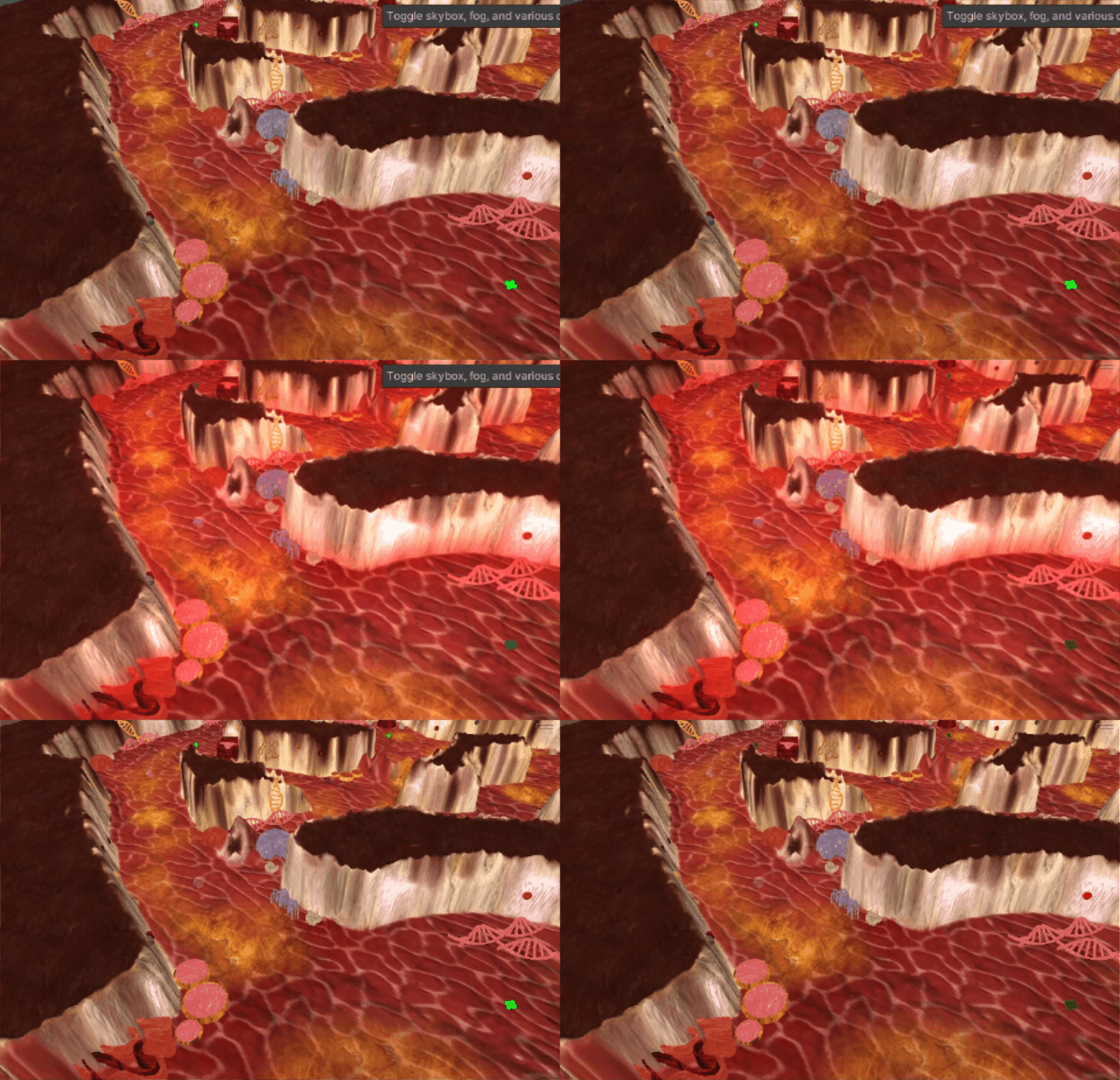
Toggling real-time/baked light in the scene

Baked Lightmap
PROBLEM 3
How to design enemy mechanics that offer an enjoyable, intuitive experience while maintaining a balanced challenge to facilitate player progression.
SOLUTIONS
-
Implement unique mechanics for each enemy type, progressively introducing new adversaries in later levels to enrich gameplay complexity.
-
Gradually intensify enemy waves, placing them strategically near collectibles and at regular intervals to maintain player engagement.
-
Conduct comprehensive playtesting to adjust values for 'hitpoints' and 'damage inflicted on player,' ensuring a well-balanced level of gameplay difficulty.
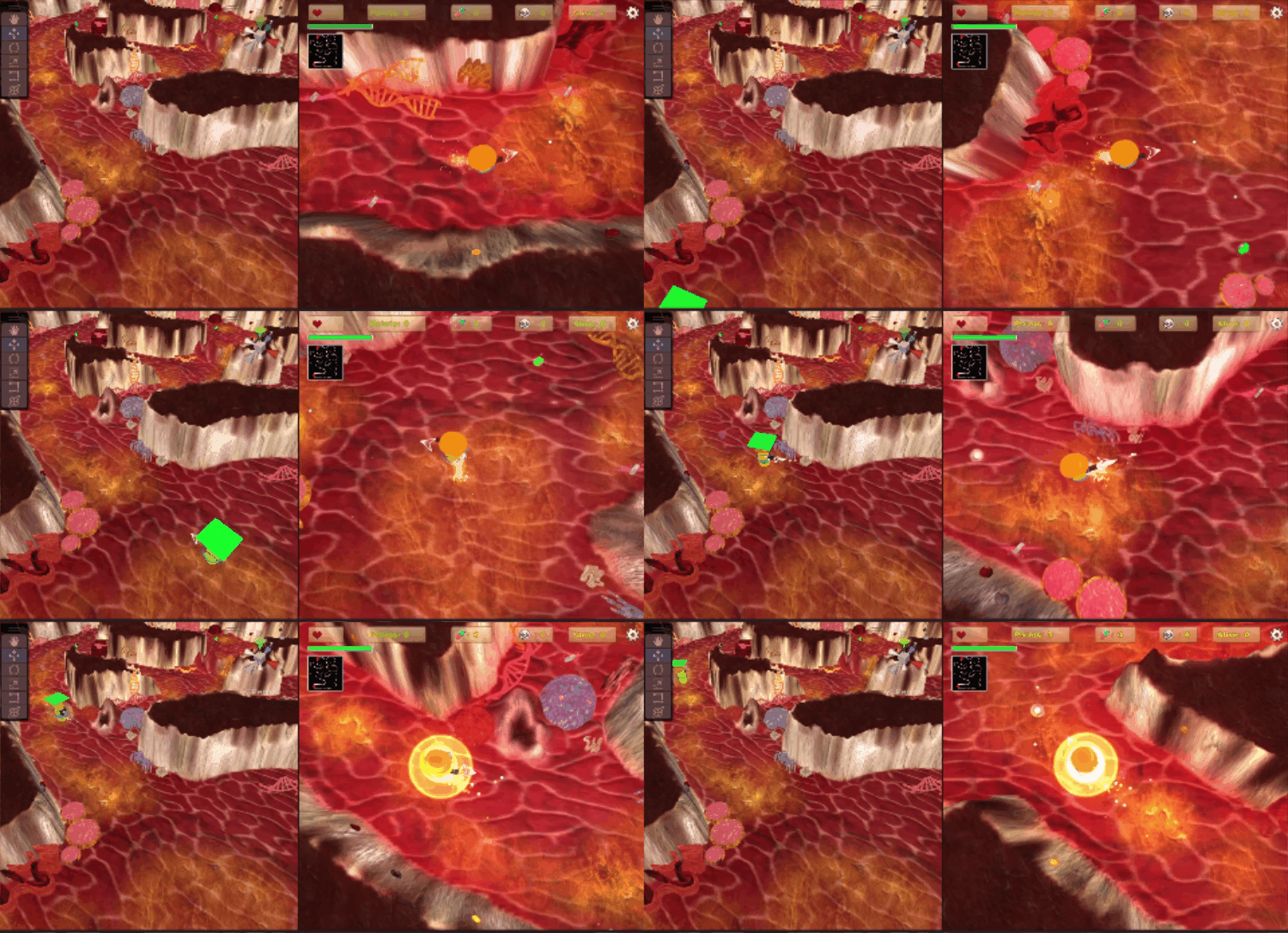
Enemy spawning would occur in hotspots
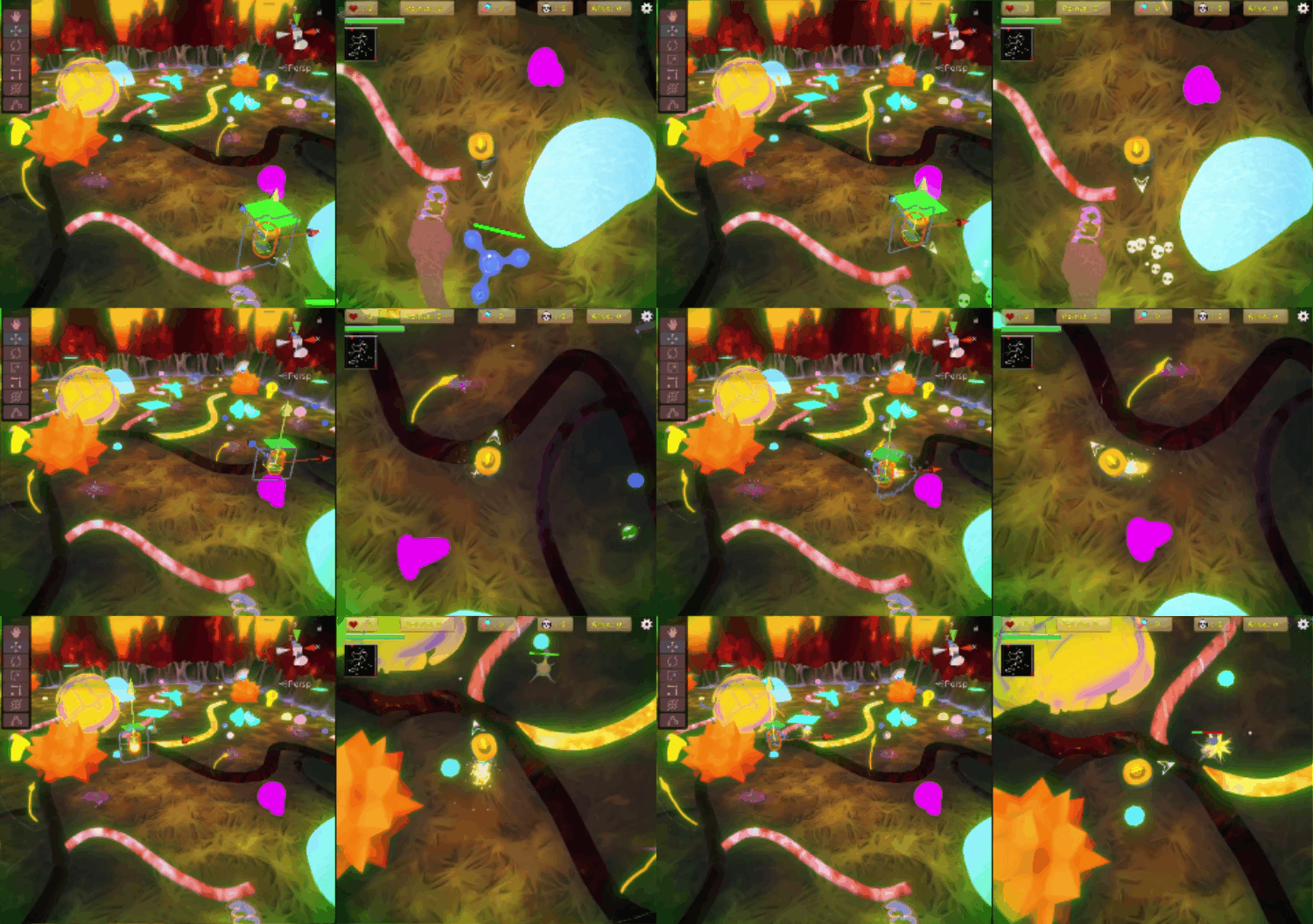
Static enemies patrol certain areas and don't spawn